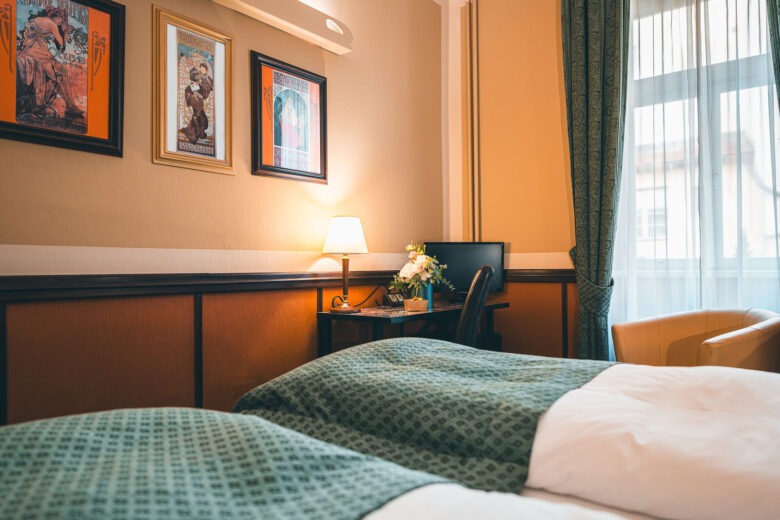
Walking through Josefov, you notice just how much history is packed into such a small area. From our family-run boutique hotel on Haštalské náměstí, right where the Old Town meets the Jewish Quarter, we watch guests head out every day to explore these streets. Learning a bit about Prague’s Jewish Quarter before you go makes the experience much more meaningful, turning a simple stroll into a look back at centuries of struggle and endurance.
The Origins of the Jewish Settlement
The story of the Jewish community in Prague begins way back in the 10th century. At first, Jewish merchants lived scattered throughout the city. Eventually, they were pushed to move into one walled-off area, which made it easier for those in power to keep an eye on them. This was the start of the Jewish Quarter.
By the 13th century, the community was well-established. Even though they faced plenty of rules about where they could live and work, they still managed to build a center of scholarship and faith that ended up influencing Jewish life across Europe.
Life in the Ghetto: Regulations and Resilience
For a long time, the quarter was a true ghetto. The walls were fixed, and as more families were forced into the neighborhood, it became incredibly crowded. The Jewish Museum in Prague keeps records of how the community managed to run its own schools, religious centers, and administration, even while living under strict outside laws.
Life was a constant balance between internal strength and outside threats. The community dealt with forced expulsions and violence, yet they always returned to rebuild their homes and synagogues. That pattern of being pushed out and coming back is central to the story of this neighborhood.
Separating Fact from Legend: The Golem of Prague
You can’t talk about the history of the Jewish Quarter without mentioning the Golem. Folklore says that Rabbi Judah Loew ben Bezalel, a 16th-century scholar, built a giant creature out of clay to keep the community safe. The story goes that he brought the Golem to life with rituals, but it eventually became too dangerous and had to be deactivated.
It is helpful to keep the legend separate from the reality. While Rabbi Loew was a real person and a major figure in Jewish philosophy, there is no proof the Golem existed. The legend is really a mirror of the community’s desire for safety during very difficult times, rather than a historical event.
The Transformation of Josefov
The Jewish Quarter looked completely different until the end of the 19th century. Between 1893 and 1913, city officials undertook a massive project they called the “asanation” to clean up and improve the aging, cramped district.
Most of the old medieval buildings were torn down during this time. The narrow, winding alleys were swapped for wide, modern streets filled with Art Nouveau and Neo-Baroque buildings. Only a few sites were saved, like the Old Jewish Cemetery and a handful of synagogues. This is what created the Josefov we see today—a neighborhood that feels like a modern part of the city while still holding onto its past.
Visiting the Jewish Museum in Prague
Today, the Jewish Museum in Prague oversees the most important historical spots in the area. It isn’t just one building, but a network of sites that cover the history and traditions of Jewish life in Bohemia and Moravia.
The main sites include:
- The Old Jewish Cemetery: One of the oldest of its kind in Europe, featuring grave layers dating back to the 15th century.
- The Pinkas Synagogue: Now a memorial for Holocaust victims.
- The Maisel Synagogue: Frequently hosts exhibits on the history of Jews in Bohemia.
- The Spanish Synagogue: Famous for its ornate, Moorish-style interior.
Make sure to check the latest opening times and ticket details before you head out. [VERIFY: opening hours and ticket information for the Jewish Museum in Prague].
Tips for Exploring the Quarter
To make the most of your trip, here are a few suggestions:
- Start Early: Josefov gets crowded by midday. Getting there in the morning makes for a much quieter experience.
- Dress Respectfully: Since these are active religious sites and memorials, modest clothing is expected.
- Walk the Boundaries: Pay attention to how the architecture shifts as you head out of the renovated Josefov streets and back into the older parts of the Old Town. It is a subtle change, but an interesting one.
If you want to read more about the history of Prague, our guide to the city’s landmarks might be helpful. [INTERNAL LINK: post #11]
Frequently Asked Questions
Is the Jewish Quarter safe for tourists?
Yes, Josefov is a safe, easy-to-navigate part of Prague. It is popular with travelers and locals, and it stays busy and well-lit throughout the day.
Do I need to buy tickets in advance?
It is usually a good idea to check the official Jewish Museum in Prague website to see if you need to book ahead for the dates you are visiting. [VERIFY: ticket booking requirements for the Jewish Museum in Prague]
How much time should I set aside for the Jewish Quarter?
Most people spend about three to five hours walking through the synagogues and the cemetery. That should give you enough time to see the museum sites without rushing.
Are the sites open every day?
The sites managed by the Jewish Museum in Prague have their own schedule and often close for Jewish holidays. Always check the calendar online before you plan your day. [VERIFY: holiday closures for the Jewish Museum in Prague]
If you are planning a trip to Prague and want a quiet place to stay, we would love to have you. You can book a room directly with Hotel Haštal on our website. We are located on the peaceful Haštalské náměstí, just a short walk from the historic Jewish Quarter.