Prague is a living museum. When you wander the alleys of the Old Town, you move through centuries of history, from Romanesque cellars to Art Nouveau facades. For many travellers, walking past these landmarks is not enough, because they want to spend the night inside one. That is the core appeal of historic hotels Prague has to offer.
Staying in a heritage building gives you a connection to the city that a newer, standardised hotel cannot match. However, “historic” is a broad term. In Prague, it usually means a building that has stood for generations, often on a square or street that has barely changed in a long time.
Hotel Haštal Prague sits on the quiet Haštalské náměstí, a church square between the Old Town and the Josefov district. In this guide, we explain what to expect from a heritage stay, what older buildings are really like, and why location matters as much as history.
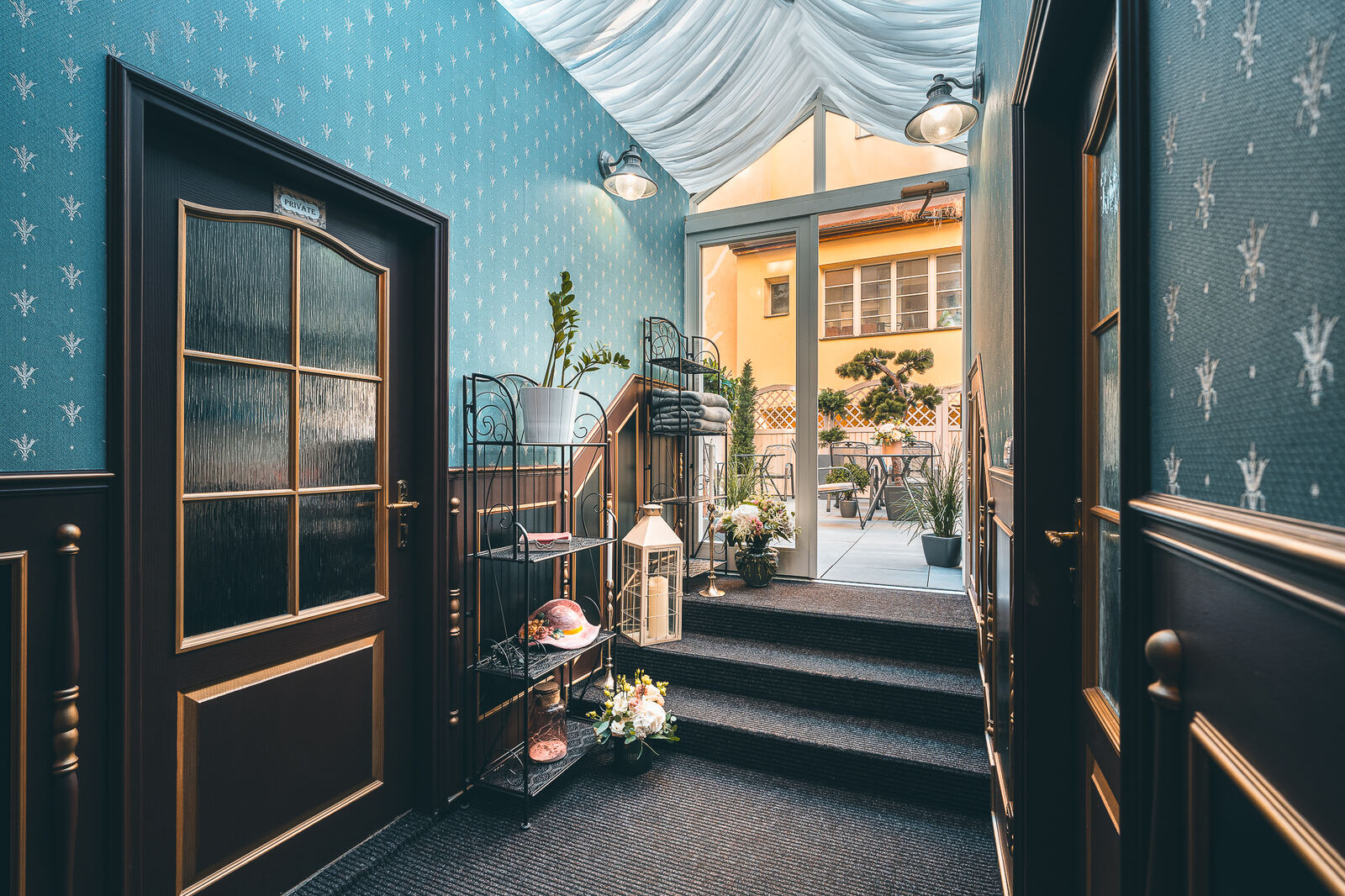
A corridor at Hotel Haštal leads out to the terrace.
What Defines Historic Hotels Prague Travellers Choose?
In a city this old, “historic” carries many meanings. Some buildings have medieval foundations with Baroque or Renaissance upper floors. When you search for historic hotels Prague offers, you are looking for properties that keep their character while still providing modern comfort.
A true historic stay depends on the building itself. For example, you may find thick stone walls, wooden ceiling beams, or windows that overlook streets with a long history. Most of these buildings did not start life as hotels. Instead, they began as private homes, merchant houses or offices, so the rooms often feel lived-in and personal. That atmosphere is hard to copy in a large commercial hotel.
At Hotel Haštal, we are a family-run boutique hotel, and our home on Haštalské náměstí shapes who we are. According to our own website, the same family has owned and run the hotel for five generations. As a result, we see ourselves as caretakers of a building in one of the city’s most storied corners.
The Honest Realities of Historic Hotels Prague Has to Offer
The charm of a heritage hotel is obvious. Even so, it helps to know what staying in an older building involves. Modern hotels aim for uniformity, whereas quirks define historic buildings.
Room Sizes and Layouts
In a modern hotel, every standard double looks like the next. In historic hotels, that is rarely true. Internal walls often follow older floor plans, so room sizes can vary, even within the same category. You might find an alcove, an unusual corner or a high ceiling. Some rooms are smaller than in a chain hotel, while others feel surprisingly grand. Therefore, check the room details before you book, and browse our room types to compare sizes.
Stairs and Accessibility
For instance, builders put these buildings up long before modern building rules, so staircases can be steeper or narrower than you expect. Owners have updated many buildings to improve access, but the original structure still shapes the layout. If you have mobility concerns, ask the hotel about the exact layout before you book.
Thick Walls and Quiet
Before drywall and steel frames, builders used heavy stone or brick. Older walls like these can help with sound and temperature. However, they do not replace modern comfort features, so it is still worth asking the hotel about windows and noise.
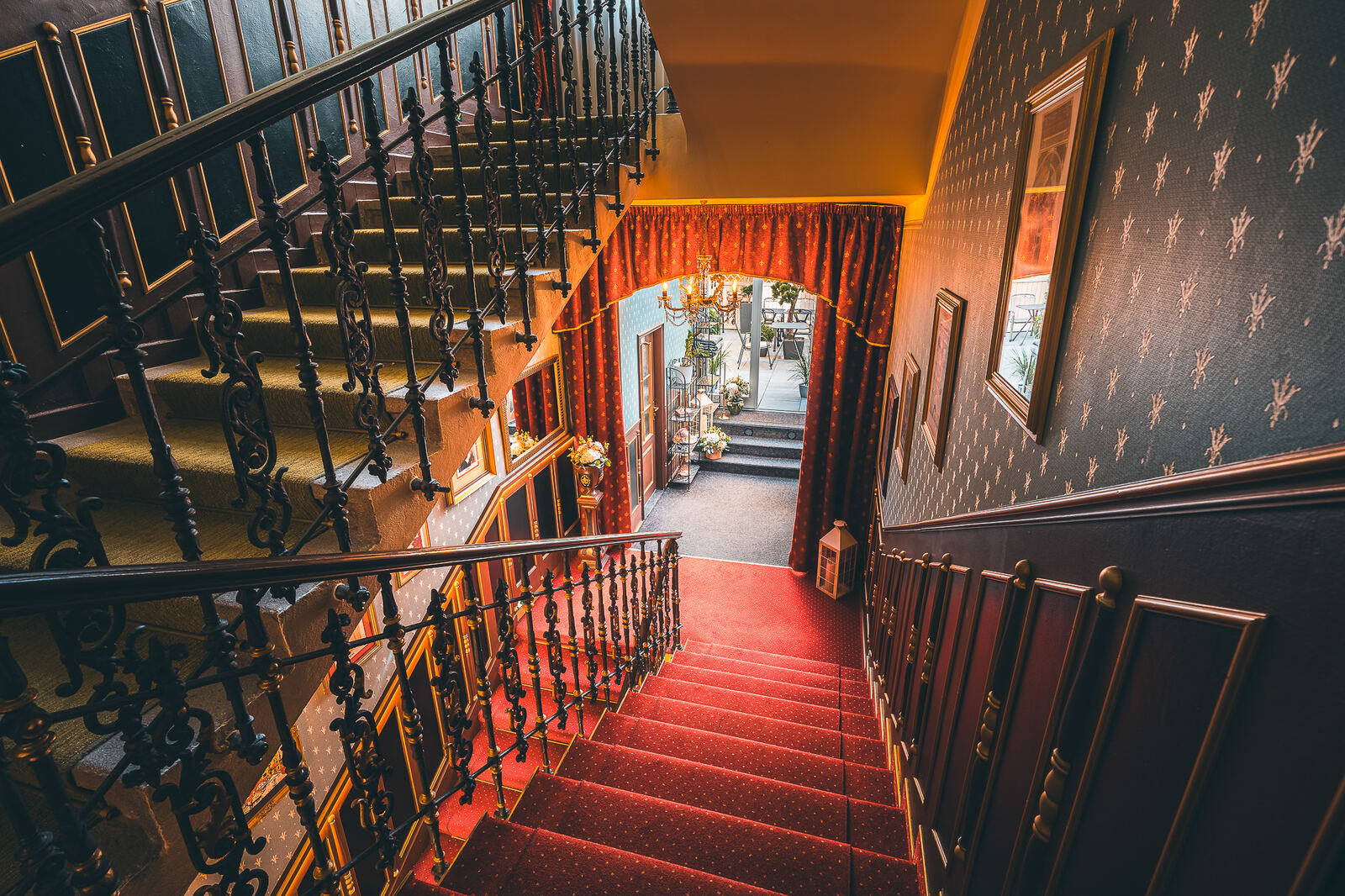
The historic staircase at Hotel Haštal.
Location Matters: Haštalské Náměstí and Josefov
When you compare historic hotels Prague travellers recommend, the surroundings matter as much as the building. Many visitors stay on the busiest streets, only to find that the noise ruins the atmosphere they wanted.
Hotel Haštal is on Haštalské náměstí, a quiet square at the edge of the Old Town and Josefov, the former Jewish Quarter. The square takes its name from the Church of St. Castulus (Kostel sv. Haštala), which stands on the square itself. A church square gives you more light and space than the narrow streets of the central Old Town.
From the hotel, you are only about 7 minutes’ walk from Old Town Square, yet you are far enough away to avoid the densest crowds. In addition, Josefov is right next door, so it is easy to visit the Jewish Museum’s sites. You can read more on the Jewish Museum in Prague website.
The Family-Run Boutique Difference
Overall, there is a big difference between a historic building owned by a large company and a family-run boutique hotel. In a family hotel, the people in charge usually feel a stronger responsibility for the building. Moreover, the owners make decisions about decor, upkeep and service personally.
For guests, this often means a warmer and more relaxed style of hospitality. Rather than follow a script, the team relies on local knowledge and a wish to see guests enjoy the city. For more tips on choosing the right place, see why guests call Hotel Haštal the best hotel in Prague Old Town and our guide to choosing a boutique hotel in Prague Old Town.
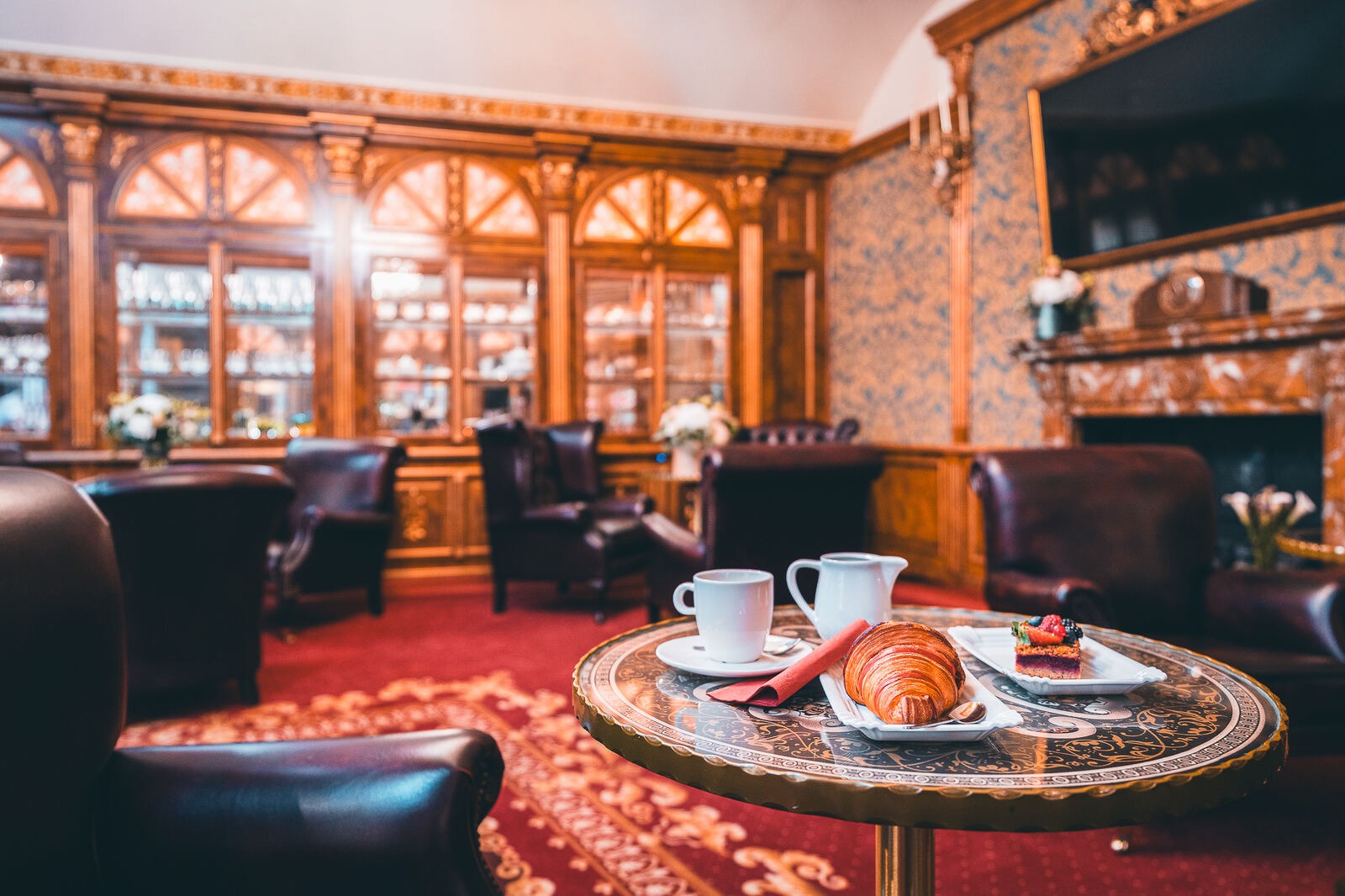
Coffee and pastry in the lounge.
What to Look for When Booking Historic Hotels Prague Offers
If you want to stay in a heritage building, keep these tips in mind:
- Research the street: Use a map to check the location. Is it a main road with constant tram traffic, or a quiet square?
- Look for original features: Mentions of “original features” or “historic structure” suggest the hotel has kept its heritage.
- Check the distance to the sights: The best of the historic hotels Prague offers lets you walk to the main sights, then retreat somewhere quiet at night.
- Consider a boutique hotel: Smaller hotels are more likely to sit in authentic older buildings than large-scale properties.
- Ask about access: Check stairs, lifts and room layouts before you book.
The Quiet Side of the Old Town
Also, many visitors spend their whole trip within a few blocks of the Astronomical Clock. It is beautiful, but it can feel overwhelming. In contrast, the edge of the Old Town, near the river and Josefov, feels like a neighbourhood where people actually live. You will find small galleries, local cafés and craft shops that are not only for tourists.
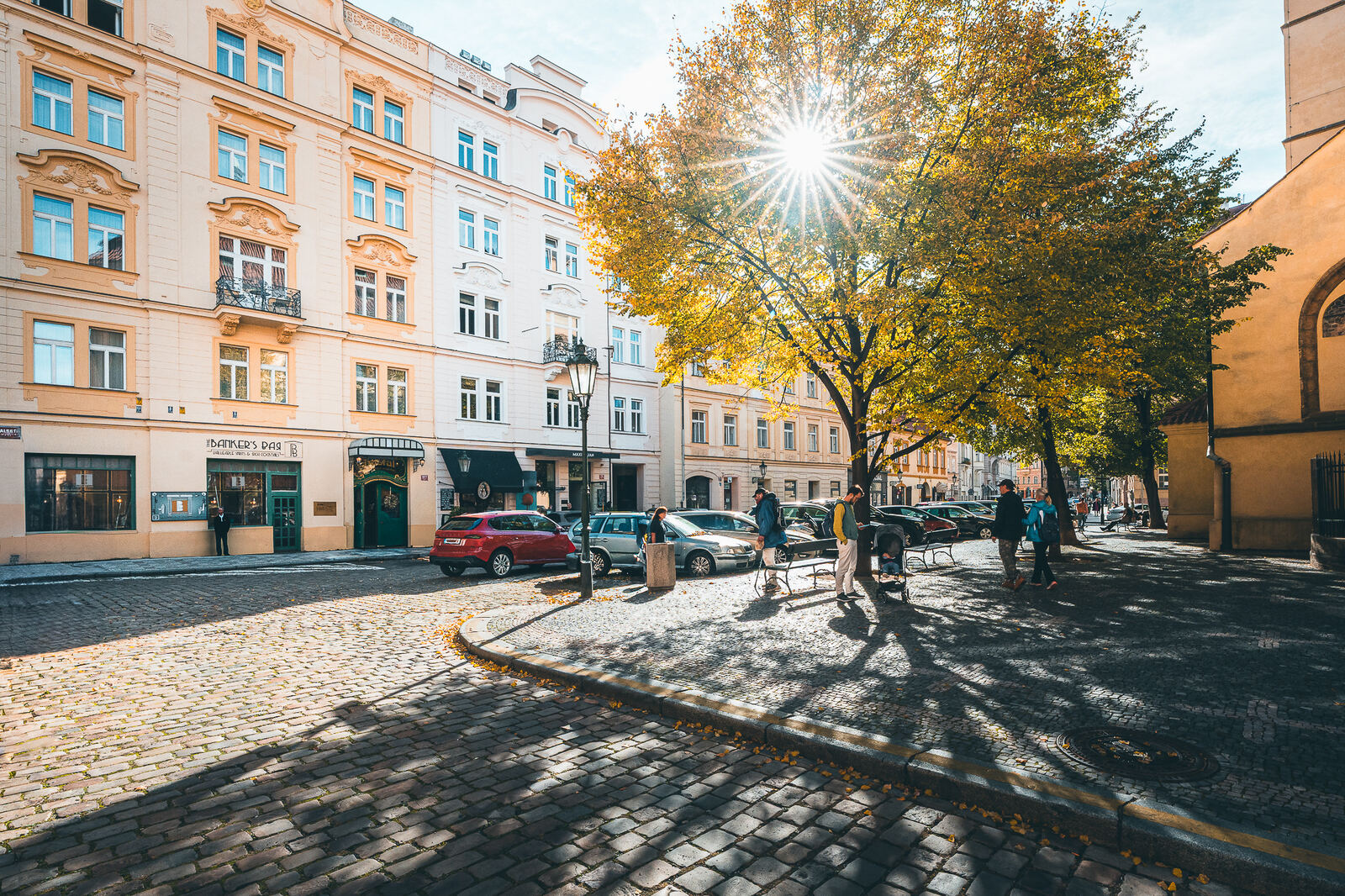
Haštalské náměstí, the quiet square outside the hotel.
The walk from Haštalské náměstí toward the Vltava River is especially peaceful early in the morning or late in the evening. At those times, when the light hits the old stone and the streets are empty, the history of the city comes alive. That is the real benefit of choosing historic hotels Prague has on its quieter edges.
An Honest Word: Is a Historic Hotel Right for You?
We believe in being honest with our guests. A historic hotel is not for everyone. If you want identical rooms, large lifts and a standard experience, a modern chain hotel may suit you better. On the other hand, if you value character and like the idea that your room has a shape of its own, a historic boutique hotel is a great choice.
Our family-run hotel aims to be a comfortable, authentic base for your trip. We do not promise glass-and-steel perfection. Instead, we offer a warm welcome in a building that is part of the city.
Historic Hotels Prague FAQ
Tap a question to see the answer.
Are historic hotels in Prague noisy?
It depends on the location. Historic hotels Prague travellers book on Old Town Square or busy nightlife streets can be noisy. However, hotels on quiet squares like Haštalské náměstí are usually more peaceful, because they sit away from the main tourist flow.
Do historic hotels in Prague have lifts?
Owners have added lifts to many older buildings. Because of the original structure, though, a lift may be small, or a few steps may remain. Ask the hotel directly if you have specific access needs.
Is it better to stay in the Old Town or Josefov?
Both areas are historic and central. The Old Town is the heart of the city’s tourism, while Josefov offers a different historical perspective and is generally a little quieter. The edge of both, near Haštalské náměstí, gives you a bit of each.
What should I expect from room sizes in an older Prague hotel?
Expect variety, because builders did not design these buildings as hotels, so room sizes and layouts differ. Some rooms are cosy, while others have high ceilings and more space.
Are historic hotels more expensive?
Not necessarily. Some luxury heritage hotels are very expensive, but many boutique hotels offer rates close to those of modern hotels, often with more character.
Ready to plan your stay? Check availability and book direct, or contact the hotel with any questions.